
Letsvisitpersia

Esfahak Village: A Hidden Mud-Brick Gem in Iran's Desert

Esfahak Village earned a place among the UN Tourism Best Tourism Villages 2024, marking an important milestone for both the village and Iran’s tourism industry.


The award celebrates Esfahak’s success in preserving its cultural heritage, encouraging sustainable tourism, and actively involving the local community in tourism development. As a result, the village is attracting growing international attention and is expected to welcome more travelers looking for authentic rural experiences and eco-friendly destinations.


More importantly, this achievement shines a spotlight on one of Iran’s hidden gems and shows that the country has much more to offer beyond well-known destinations such as Tehran, Isfahan, and Shiraz.
Where is Esfahak Village

Esfahak Village is a peaceful desert settlement located in Tabas County, South Khorasan Province, eastern Iran. The Village lies just 40 minutes by car from Tabas, making the city the fastest and most convenient gateway to the village.


Fortunately, Tabas has its own airport, with regular flights from Tehran’s Mehrabad International Airport. After arriving in Tabas, you can easily reach Esfahak by road in less than an hour.


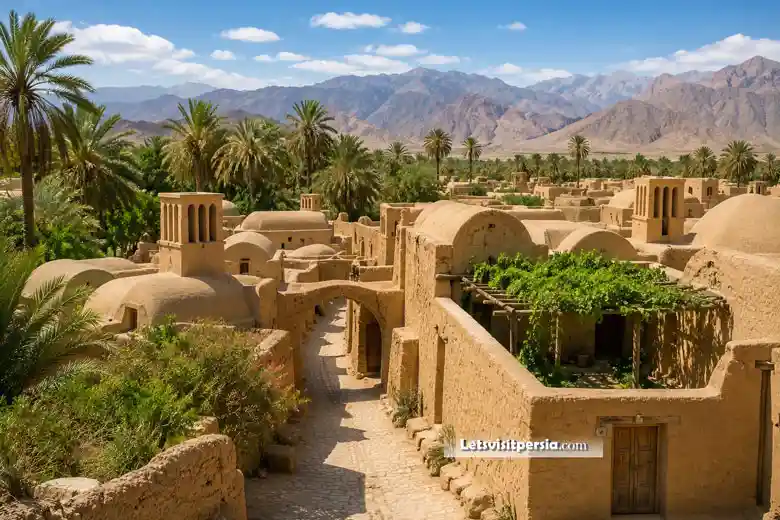
Known for its centuries-old mud-brick architecture, the village has become one of Iran’s most inspiring examples of cultural heritage preservation and sustainable tourism.


Everything changed after the devastating 1978 Tabas earthquake, which destroyed much of Esfahak. The villagers first lived in temporary tents before building simple wooden shelters known locally as Otagh-e Chooi. Although a modern village was later constructed nearby, the residents never abandoned their ancestral home.

Panoramic view of Esfahak Village with palm trees and surrounding mountains
esfahak village landscape

The History and Significance of Esfahak Village

Known for its centuries-old mud-brick architecture, the village has become one of Iran’s most inspiring examples of cultural heritage preservation and sustainable tourism.


Everything changed after the devastating 1978 Tabas earthquake, which destroyed much of Esfahak.

The villagers first lived in temporary tents before building simple wooden shelters known locally as Otagh-e Chooi.

Although a modern village was later constructed nearby, the residents never abandoned their ancestral home.

Why is Esfahak Village Special?

In 2008, a group of young villagers joined forces with researchers and conservation experts to restore the historic settlement. Together, they revived traditional mud-brick houses, established a local adobe workshop, and preserved the village’s unique architectural identity.


As a result, Esfahak became a successful model for post-disaster recovery through community-based tourism and cultural conservation.

Moreover, the local community launched the Tours of Hope initiative to inspire resilience in other earthquake-affected regions across Iran.


They also formed local cooperatives and promoted scientific research by supporting projects such as a seismic research center.

Thanks to these efforts, Esfahak received the Asian Architecture Award in 2017 and Germany’s prestigious TO DO Award in 2020 for its innovative approach to sustainable tourism and community empowerment.


Their dedication reached another milestone in 2024, when UN Tourism (formerly UNWTO) selected Esfahak as one of the World’s Best Tourism Villages.

The village earned this recognition for its outstanding achievements in protecting cultural heritage, promoting sustainable tourism, strengthening community participation, and preserving its natural environment.


Today, Esfahak is far more than a historic village. It stands as a symbol of resilience, community spirit, and sustainable development, proving that even after a devastating disaster, local people can revive their heritage and transform it into a world-class travel destination.

Interested in discovering authentic villages like Esfahak?

Esfahak joined a distinguished group of Iranian villages recognized for their cultural and tourism value, including Meymand, Abyaneh, Palangan, Kandovan, Fahraj, Bisheh, Qaleh Bala, and Kandelous.


If you’re interested in discovering these remarkable destinations, don’t miss our guide to the Most Beautiful Villages in Iran.

Things to Do in Esfahak

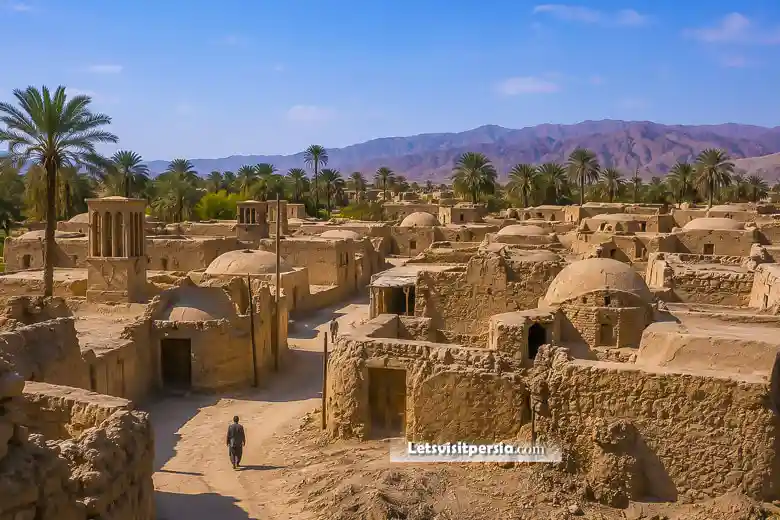
Traditional Mud-Brick Architecture and Sabats: Wander through narrow alleyways lined with traditional mud-brick houses, many featuring windcatchers and covered passages known as sabats. These shaded walkways not only create a unique atmosphere but also reflect the village’s ingenious desert architecture.


Esfahak Observatory: Thanks to the village’s remote location and minimal light pollution, the observatory is an ideal place for stargazing. On clear nights, visitors can enjoy breathtaking views of the desert sky filled with countless stars.

Traditional mud-brick houses and alleyways in Esfahak Village
Esfahak oasis

Historic Bathhouse: This beautifully restored traditional bathhouse offers a glimpse into the daily life of past generations. Its classic Persian design and authentic architectural details make it one of the village’s cultural highlights.


Jameh Mosque and Historic Quarter: At the heart of Esfahak’s old village stands a simple yet charming historic mosque, surrounded by the preserved mud-brick neighborhood that showcases the authentic character and peaceful atmosphere of this desert settlement.

Where to Stay in Esfahak

Since Esfahak is only about 40 minutes from Tabas, most visitors explore the village on a day trip. However, if you would like to experience the local way of life at a slower pace, spending a night in one of the village’s traditional eco-lodges is well worth considering.


Keep in mind that these accommodations are designed to preserve the village’s authentic character. The rooms are built with traditional materials such as mud bricks, clay, and wooden beams, and guests typically sleep on comfortable floor bedding rather than standard hotel beds.


If you’re looking for a luxury hotel, this may not be the right choice but if you want an authentic cultural experience, staying in Esfahak is likely to be one of the most memorable parts of your journey.

Best Time to Visit Esfahak Village

Thanks to its desert location and dry climate, spring and autumn are the best times to visit Esfahak Village. During these seasons, the weather is pleasantly mild, making it comfortable to wander through the village’s narrow mud-brick alleyways, explore its historic quarter, and enjoy walks among the surrounding palm groves and gardens.


Winter can be quite cold, especially after sunset, while summer temperatures are often extremely high, making outdoor sightseeing less enjoyable during the day.


If you’re planning to fully experience the village and its peaceful atmosphere, visiting in spring or autumn will offer the most comfortable conditions.

As someone who has spent years introducing international travelers to Iran, I believe Esfahak is one of those places that offers an authentic experience far from the country’s better-known tourist routes.

Want to discover more of Iran's breathtaking deserts?

Explore our desert tours and experience vast sand dunes, star-filled skies, ancient caravan routes, and authentic desert villages across Iran.

Vahid Shokoohi

I’m an Iran travel writer, photographer, and tour guide with more than 15 years of experience in inbound tourism. Through firsthand travel across Iran and years of working with international visitors, I share practical travel advice, local insights, and authentic experiences to help you explore Iran with confidence.

Share this post

5/5 - (1 vote)

2 Comments

  • Zarmina Gholipour says:

    Great article! Esfahak Village sounds like a fascinating place to explore. How well-developed are the facilities there for tourists? I’m curious if it’s easy to find accommodation nearby or if visitors typically opt for day trips. I read somewhere that global travel platforms like world-prices provide info on costs, but it’s unclear how current or reliable that data might be. Either way, it’s exciting to see more off-the-beaten-track destinations in Iran getting recognition. Thanks for the insightful post!

    • Admin says:

      Contrary to expectations, the tourist infrastructure in this beautiful village is not that good, and it is perhaps best suited to backpackers and solo travelers. There are several traditional and eco-friendly accommodations in the village that also offer local cuisine to travelers.

Leave a Reply

Your email address will not be published. Required fields are marked *